Field guide
Every supplier data field needs an owner.
Prices, availability, units, contracts and cost centers do not belong to the same system. Clear ownership is the foundation of catalog quality.
A practical method for procurement and IT teams
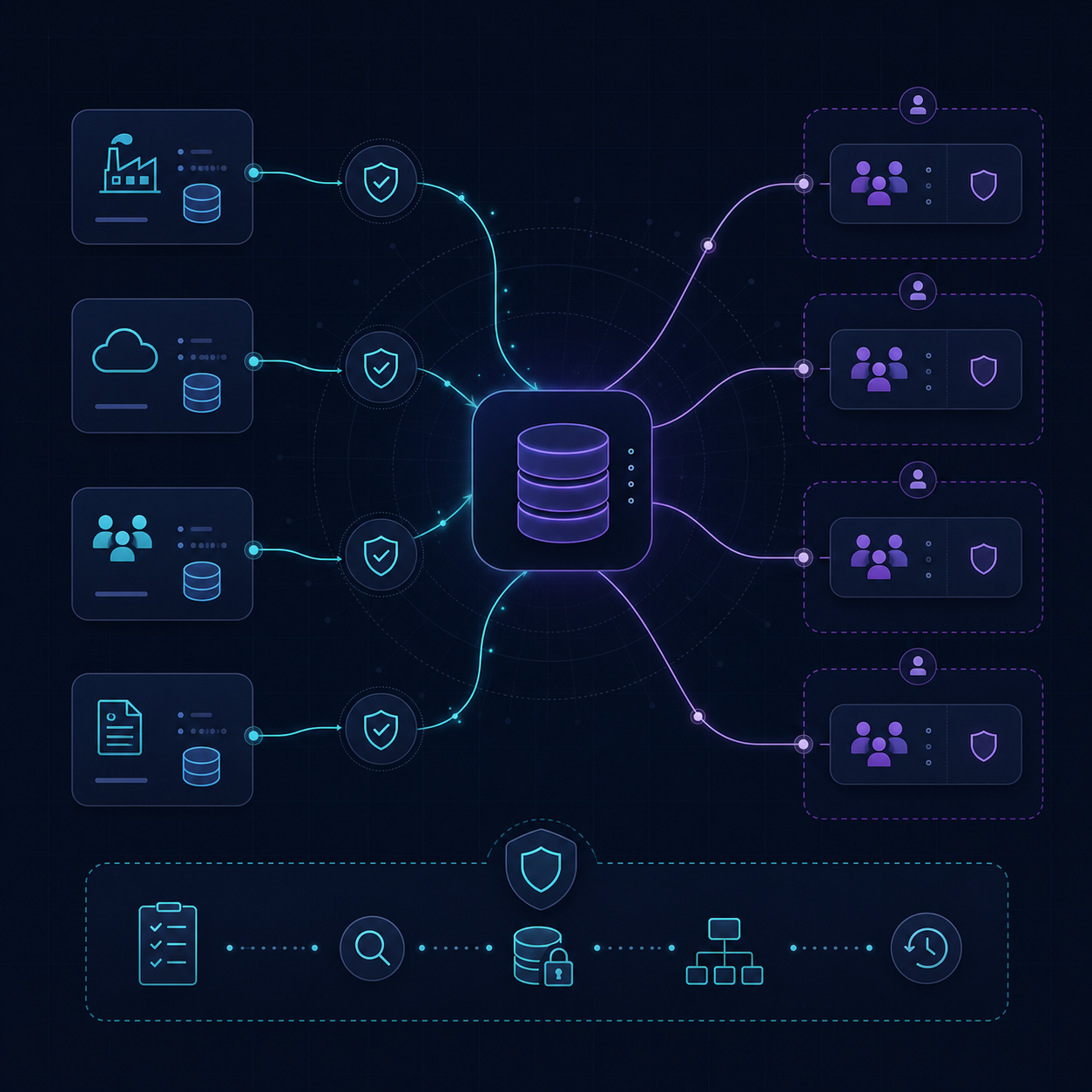
A catalog is a shared responsibility.
The supplier may own product characteristics and availability. Procurement may own negotiated prices and assortment rules. The ERP may own entities and accounting references.
Documenting this split prevents every team from patching the symptom in its own system.
03Method
The steps to structure
- 01
Name the source
Define which system is authoritative for each field.
- 02
Validate before publish
Check mandatory fields, units, currency, dates and duplicates.
- 03
Route corrections
Return the issue to the owner who can permanently fix it.
- 04
Track freshness
Keep last validation date and operational responsibility visible.
04Takeaways
What Kelqio helps make visible
Data
One common structure for suppliers, catalogs, carts and orders.
Exceptions
Errors classified and assigned to the right team.
Continuity
A traceable path between supplier, procurement and ERP.
Next step
Bring your supplier list. We’ll show you the flow.
A working session with our team, using your systems and your supplier mix — not a generic slide deck.
- 01
Where your suppliers sit today: connected, semi-connected, or not at all
- 02
How each channel would route through Kelqio into your ERP and procurement platform
- 03
What connecting the next twenty suppliers would actually involve
Enterprise integration product. No credit card, no self-serve trial — a conversation with someone who knows procurement systems.