Field guide
An integration is not operable until you can see it.
Statuses, correlation IDs, categorized errors and safe retries turn an invisible failure into an actionable incident.
A practical method for procurement and IT teams
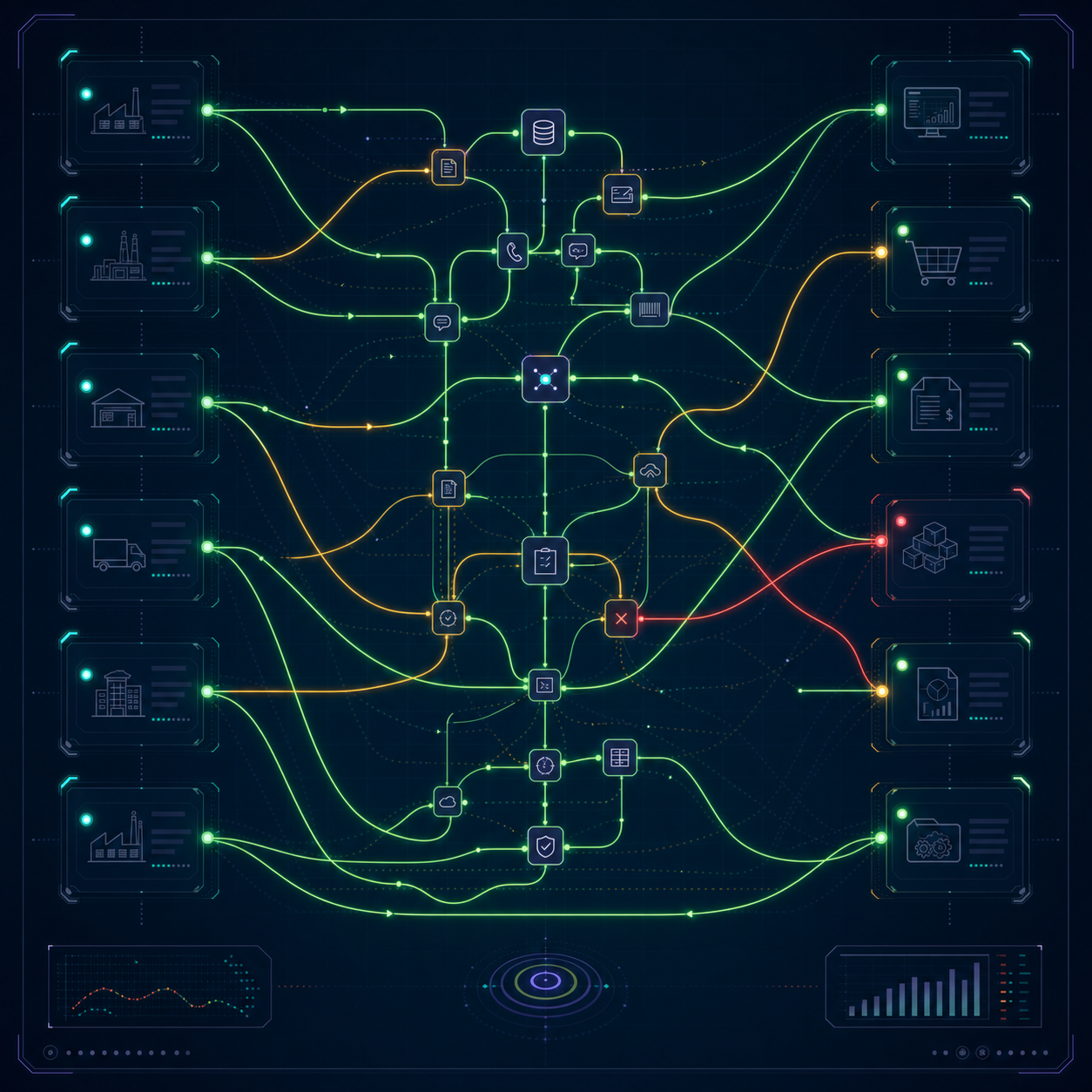
Make every exception explain itself.
A launch-day success says little about the weeks that follow. Formats change, suppliers pause a feed and data becomes invalid.
Operations need one view of what happened, where it stopped, who owns the next action and whether a retry is safe.
03Method
The steps to structure
- 01
Record the journey
Keep source, target, supplier, timestamp and correlation ID.
- 02
Classify the failure
Separate technical outage, invalid data, business refusal and user action.
- 03
Assign ownership
Route the exception to the team that can resolve it.
- 04
Retry safely
Prevent duplicates and preserve every attempt in the history.
04Takeaways
What Kelqio helps make visible
Data
One common structure for suppliers, catalogs, carts and orders.
Exceptions
Errors classified and assigned to the right team.
Continuity
A traceable path between supplier, procurement and ERP.
Next step
Bring your supplier list. We’ll show you the flow.
A working session with our team, using your systems and your supplier mix — not a generic slide deck.
- 01
Where your suppliers sit today: connected, semi-connected, or not at all
- 02
How each channel would route through Kelqio into your ERP and procurement platform
- 03
What connecting the next twenty suppliers would actually involve
Enterprise integration product. No credit card, no self-serve trial — a conversation with someone who knows procurement systems.